Turning Up the Heat (and the Savings) with the Sensi Smart Thermostat
January 24, 2026
Discover how the Emerson Sensi Smart Thermostat pairs simple installation, energy-saving scheduling, and privacy-friendly design to help you cut heating and cooling costs—even without a common wire. We break down setup, app features, voice control compatibility, and real-world performance to help you decide if the Sensi fits your smart home.
Turning Up the Heat (and the Savings) with the Sensi Smart Thermostat
A down-to-earth guide to installing, using, and knowing what you’re really getting
Why This Thermostat Might Make Sense for You
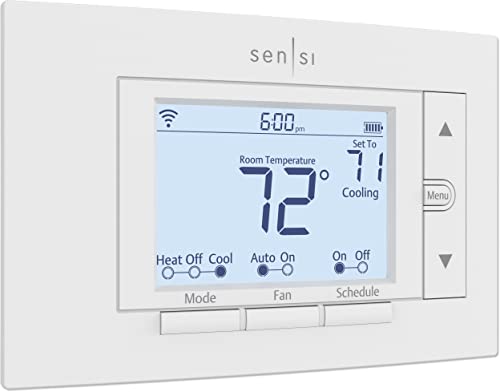
If you’re tired of fiddling with that ancient dial on your wall or a thermostat that seems frozen in the last decade, the Sensi Smart Thermostat could be a decent upgrade. Its size is basically a drop-in for your old setup—measuring 5.88” wide by 3.75” tall—so no worrying about patching or painting afterward. It’s button-controlled, none of those fancy touch-only gimmicks, which means folks who miss a physical switch won’t be left out.
There’s also the energy-saving angle: Emerson says you can chop about 23% from your heating and cooling costs, based on the ENERGY STAR estimate that counts on setting up good schedules and remote control. The thermostat works without a common wire in most setups but will ask for one if your system demands it to keep the power steady.
One refreshing move: Emerson pledges not to sell your personal data, which is a relief in a sea of smart gadgets eager to pump out info on your home’s comings and goings.
But make no mistake—this is a thermostat that plays the basics well but trips up on some modern conveniences and reliability.
Installing: What You Need to Know Before You Start
The box comes with the thermostat, two AA batteries, mounting screws, wire stickers, and a guide, plus the Sensi app, which walks you through the wiring step-by-step. The faceplate has a built-in level so you won’t hang it cockeyed, which is a nice touch if you can’t stand wonky walls.
Here’s the catch: if your HVAC system requires a common wire (C-wire), and you don’t have one tucked in your wall, you’re looking at either fishing one through the wall studs or hiring an electrician. That means this “easy DIY install” might suddenly feel less easy.
Setting the system type—whether furnace or heat pump—also isn’t obvious. Get this wrong, and the thermostat might cycle weirdly or won’t heat or cool properly until you fix it. The app helps but isn’t always transparent on what those codes mean. So brush up on your system’s specific setup before diving in.
Using the App and Scheduling
The Sensi app is straightforward enough. You can build schedules around your day-to-day: wake-up, leaving home, returning, and bedtime. It has geofencing that adjusts temps when everyone’s out, which is good for saving energy. It tracks how many hours your heat and cool run daily, showing charts and bar graphs. But if you want detailed logs—say, when exactly the AC kicked in or how long your heat pump ran each cycle—you’re out of luck. The app just doesn’t provide that level of breakdown.
Filter change reminders come on a calendar basis, not factoring in actual HVAC runtime. So if your place collects dust faster or you run the fan a lot, those alerts could be pretty meaningless or annoying.
Beware, the app sometimes stubbornly refuses to save your schedule tweaks on the first try. You might have to back out and re-edit for it to stick.
Voice Control: Alexa and Google Play Nice, Bixby Left Out
If you’re tied into the Amazon or Google ecosystems, the Sensi thermostat will slot in smoothly. Voice commands to change temperature or switch modes work without a hitch, which is convenient if you end up juggling teenagers or a busy household.
On the other hand, no direct Bixby support here. If Samsung’s voice assistant is your go-to, you’ll need a SmartThings hub to bridge the gap, or else stick with Google or Alexa. Not a dealbreaker unless you built your whole home around Samsung.
Connectivity and Reliability Issues
Wi-Fi connections with the Sensi aren’t always rock-solid. It can disconnect randomly or require a reset, especially if you’re running on battery power without a C-wire. When the network drops, it might take a couple of minutes to reconnect, or sometimes you’ll have to swap batteries to get it back online. That’s no fun if your thermostat sits in a tricky spot.
The touchscreen doesn’t get top marks either—expect occasional lag when adjusting temps or navigating menus, which can be frustrating if you’re in a hurry or if multiple people want to adjust settings at once.
Reports of inconsistent run time data mean you can’t rely on this thermostat to diagnose HVAC problems. It tends to hand out generic alerts that aren’t much help troubleshooting quirks.
Energy Savings? Yes, But…
The promise of slashing energy use by around 23% comes with a big “if.” If you spend your days constantly adjusting the thermostat manually or your household can’t agree on temperature settings, you’re unlikely to hit that number. Expect closer to 10–15% in real world savings from consistent scheduling and using “away” modes properly.
The smart maintenance reminders might help avoid premature repairs or failures but only if you follow through on them. Otherwise, it’s just another notification you’ll ignore.
Who’s This Thermostat For?
Go for the Sensi if:
- You want a straightforward thermostat that’s a relatively simple DIY swap.
- You’re fine with basic programming and don’t need minute-by-minute energy details.
- You value data privacy and want to avoid your thermostat becoming an ad data source.
- You already use Amazon Alexa or Google Assistant and want voice control.
- You have or can add a common wire to maintain steady power and Wi-Fi.
Skip it if:
- You expect rock-solid, never-dropping Wi-Fi connectivity.
- You want detailed cycle logs or deep HVAC analytics.
- Your smart home revolves around Bixby, and you don’t want extra hubs.
- You need a lightning-fast touchscreen and snappy menu navigation.
The Emerson Sensi Smart Thermostat handles the essentials without fuss, but don’t expect it to be flawless. If you want a hassle-free install and basic smart features with decent privacy, it’s worth a look. Just be ready for occasional network hiccups and a touchscreen that likes to daydream sometimes. For a family juggling work, school, and all the noise that comes with, it’s functional and affordable—but not perfect.