ANMEATE Baby Monitor: What It Does Well and Where It Falls Short
January 14, 2026
An in-depth review of the ANMEATE Baby Monitor’s FHSS connection, pan-tilt-zoom camera, night vision, temperature alerts and more, highlighting its pros and cons for nursery use.
ANMEATE Baby Monitor: What It Does Well and Where It Falls Short
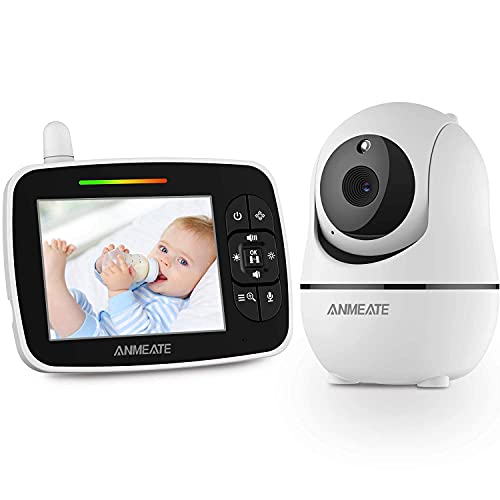
The ANMEATE Baby Monitor offers a dedicated 2.4 GHz FHSS connection and a 3.5-inch LCD without relying on Wi-Fi or apps. It features remote pan-tilt-zoom controls, infrared night vision, a temperature sensor, built-in lullabies, and claims a wireless range up to 960 feet. Here’s how these features stack up in a home setting.
Features and Setup
You get a dome-shaped camera, a parent monitor, power adapters, wall-mount hardware, a kickstand, and a USB charging cable. Pairing is straightforward—just plug in both units and sync them, no complicated apps or router tweaks involved. That said, the supplied plastic wall mount bends easily under the camera’s weight, and the kickstand hinge can loosen within a few uses, so expect to reinforce the setup if you want solid placement.
Camera and Display
The camera’s 355-degree pan and 120-degree tilt give flexible remote framing, useful if you want to follow a crawling toddler across a small room. The digital zoom is limited to a single step and noticeably reduces image sharpness, resulting in a pixelated view when zoomed in. The lightweight 3.5” LCD is easy to place on a countertop but lacks an anti-glare coating, making bright daylight views frustratingly washed out.
Night Vision Performance
Automatic infrared night vision activates in low light, providing clear images up to about 6 feet. Beyond that distance, the picture degrades quickly—blurry and indistinct—so relying on it to check on your baby across a larger nursery might not be workable.
Temperature Monitoring and Alerts
This monitor includes a room temperature sensor that triggers alerts if it detects extremes. The sensor’s readings can fluctuate around +/-2°F, leading to occasional false alarms that might prompt unnecessary thermostat adjustments. Calibration allows some tweaking but involves trial and error. A feeding timer on the parent unit lets you set reminders every 2, 4, or 6 hours; however, the small digits on the display can be tricky to read in low-light or groggy conditions.
Lullabies and Two-Way Audio
Five simple, synthesized lullabies are built in but sound basic and artificial, similar to early digital game tunes, which might not be soothing to all babies. Two-way talk lets you communicate with your child, but the microphone can distort when you speak close to it, producing an echo and feedback that could be startling. Also, volume control isn’t very granular—the lowest volume setting can still be louder than desired for quiet nursery environments.
Battery Life and Charging
The camera’s rechargeable 1,200 mAh battery suggests several hours of use, but actual runtime may drop to around 30 minutes off charger during regular use. Eco Mode extends this to about two hours by turning off the screen and limiting audio. The charging port uses a small, proprietary barrel connector that tends to fail after a few months, potentially requiring replacement from customer service. Handling charging cables carefully and keeping spares handy is advisable.
Signal Range and Security
While the stated range is 960 feet, that applies only to open, barrier-free spaces. Walls and floors typically reduce indoor range to roughly 100 feet, consistent with most analog setups. The FHSS transmission helps avoid Wi-Fi hacking vulnerabilities, since it doesn’t connect to the internet. Still, the scrambling is basic; anyone nearby who pairs to the same channel could intercept your video and audio, so it’s not fully secure against local prying.
Build Quality and Expandability
The sleek black dome design looks good but uses thin plastic that feels fragile. The parent monitor’s buttons may wiggle, and the included wall hardware often requires reinforcement to maintain stable positioning. You can connect up to four cameras to a single parent monitor, but extra cameras are pricey, and managing multiple feeds on a 3.5” screen can be unwieldy.
Who Is This For?
ANMEATE’s baby monitor suits parents wanting a simple, non-Wi-Fi, plug-and-play solution with basic pan-tilt-zoom capability and temperature monitoring. It’s compact and mostly functional for small nurseries where you can manage its limited battery life and mounting quirks.
If you need longer battery runtime, sturdier hardware, trustworthy night vision across larger rooms, or lullabies that don’t sound like a vintage video game, this model may cause more headaches than relief. While the FHSS tech keeps your feed off the internet, its local security limitations should factor in if privacy is a top concern. More refined options exist for families seeking hassle-free, solid performance without constant babysitting of their baby gear.