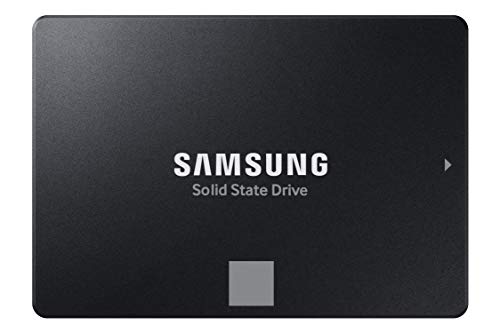
SAMSUNG 870 EVO 1TB SATA SSD: Solid Performance Meets Software Headaches
February 03, 2026
Explore the Samsung 870 EVO 1TB SATA SSD's top SATA III speeds, reliable endurance, and easy installation—balanced against frustrating cloning software and buggy management tools.
SAMSUNG 870 EVO 1TB SATA SSD: Solid Performance Meets Software Headaches
If you’re thinking about turbocharging an older laptop or tightening up your streaming setup without diving into NVMe territory, the Samsung 870 EVO 1TB SATA SSD is a strong contender—provided you can live with some of its quirks.
The drive hits the top speeds possible over SATA III, cruising around 560 MB/s for reads and 530 MB/s for writes. That means your computer boots faster, games and apps load without unnecessary waiting, and handling large files—say, a full day’s worth of video footage—won’t grind to a halt because of a tiny cache running dry. The built-in variable TurboWrite buffer smooths out those longer transfers, which cheaper drives often struggle with.
Now, let’s talk speed context: this puppy maxes out the SATA interface, but if you’re eyeing NVMe drives, expect about 3 to 5 times faster rates there. Still, it’s a huge upgrade for spinning hard drives and older systems stuck on SATA connections.
Imagine dragging a 50 GB video project to the drive: it will keep the pace steady for nearly the entire transfer before gradually tapering off as the cache fills. For day-to-day use—loading patient records or high-res dental imaging files—that consistency matters.
Here’s where things get sticky: Samsung’s Data Migration software is tedious, slow, and, frankly, frustrating. It doesn’t recognize non-Samsung source drives, meaning if you’re trying to clone from anything else, it’s a slog and sometimes a disaster if you have multiple partitions or dual-boot setups. Expect marathon cloning sessions, upwards of 4 or 5 hours per terabyte, especially if your USB-to-SATA adapter sticks to USB 2.0. Use USB 3.0 or better to avoid a crawl.
And then there’s Samsung Magician, the so-called all-in-one manager for your SSD. It sounds great in theory—firmware updates, health checks, performance tweaks—but in practice, it’s buggy and unreliable. False error warnings, random crashes, and overprovisioning features that don’t actually reserve disk space are common headaches. Your best bet is to install Magician solely for firmware updates or a quick health scan, then uninstall it to save yourself constant nagging.
Installing this drive is straightforward if you have a desktop with a 2.5-inch bay: just swap it with your old drive. Laptop users need to watch out for the right drive height or mounting bracket to avoid a loose fit. Also, mind your partition scheme—choose MBR for older Windows 7 machines or GPT for modern Windows 10/11 setups, and make sure your BIOS matches (UEFI or UEFI+Legacy). Otherwise, your system might not see the full capacity or fail to boot.
Samsung backs the 870 EVO with a 5-year warranty and rates it for an endurance of up to 600 terabytes written (TBW). To put it in everyday terms, if you’re writing around 100 GB daily—something a casual video editor or dedicated streamer might do—you’re looking at roughly three years before hitting that ceiling. Heavy professional workflows, like nonstop 4K video editing or many virtual machines, would wear this out faster, and then you’d want to look at enterprise-grade solutions.
Compatibility isn’t flawless either. This drive only works in systems that have a 2.5-inch SATA slot. M.2 laptops without that slot or recent MacBook Pros that ditched SATA for PCIe won’t support it natively. NAS devices and video recorders that rely heavily on sustained writes generally dig the endurance but sometimes run into firmware issues causing freezes—check your hardware compatibility before grabbing one.
So who’s this for? If you’re breathing life into a laptop that’s been lugging around an ancient spinning drive or want a dependable boot drive for general-purpose computing, gaming, or moderate content creation, the 870 EVO delivers solid value. However, if your workflows need blistering NVMe speeds, complex multi-OS setups, or if you detest ironing out BIOS and partition issues, look elsewhere.
In the end, the Samsung 870 EVO 1TB SATA SSD nails dependable SATA performance with the caveat that Samsung’s software tools can be maddeningly unreliable. If you’re prepared for occasional software quirks and mostly want straightforward, stable storage, this drive can refresh your setup without a full system overhaul. Just don’t expect flawless out-of-the-box cloning or management software bliss.