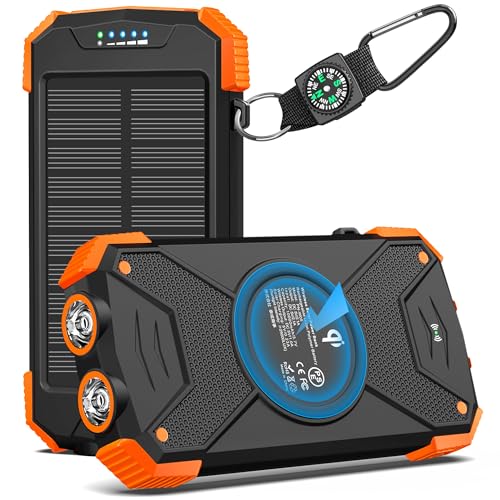
Is the BLAVOR Solar Charger the Right Power Buddy for Your Adventures?
January 25, 2026
Discover whether the BLAVOR 10,000mAh solar charger is the ideal lightweight power solution for day hikes, covering charging speeds, durability, and real-world performance.
Is the BLAVOR Solar Charger the Right Power Buddy for Your Adventures?
Trek Light, But Clock the Weight
At just over nine ounces, the BLAVOR packs easily into most daypacks and won’t shove your shoulder joints over the edge on short hikes. But don’t mistake its petite size for featherweight magic—it still adds up when you’re hauling water, food, and tent gear over a full day’s trail. If your knees or shoulders fuss after miles, that little extra weight registers more than you’d like. Compact, sure, but not completely negligible.
Fast Wired Charging but Don’t Count on Solar for Quick Juice
Plug in with the USB-C port, and you get 20 watts of power delivery—enough to raise an iPhone 15’s battery to around 65% in 30 minutes. If you want to feed three devices simultaneously, they each grab roughly a third of that power, so charging times stretch. The built-in solar panel is tiny, maxing out at about 1.15 watts. That’s barely enough to maintain a smartwatch’s charge and nowhere near fast enough to recharge the power bank itself in a reasonable time. Rely on solar only as an emergency backup, not your main charging method.
Wireless Charging Works, But It’s Not Lightning Fast
The Qi wireless pad delivers 10 watts, which is roughly half the speed of the wired 20-watt input. It’s handy if you hate cords and want to toss your phone on top, but alignment is finicky. Outdoor shake or a slight phone shift and the charge cuts out. It’s best for quick desk-top or campsite boosts, not your primary power-up strategy when you’re far from an outlet.
Built to Take Rain, Not a Swim
This charger sports an IPX5 rating, meaning it can shrug off splashes and light rain but won’t survive being dunked in water. The ABS and polycarbonate shell resists scrapes well, yet the rubberized coating scuffs and traps dirt easily. The port covers seal tight to keep dust and drips out, but fiddling with them while wearing gloves can get frustrating fast. The compass included on the carabiner is more decorative than practical—don’t expect it to replace your trusted navigation tools.
Flashlight and Compass—More Handy Flicker Than Survival Tool
The dual LEDs on one end put out a beam brighter than most phone lights, with settings for high, low, and SOS blinking. The bright mode lights up about five to six yards—enough for tent setup but not for long-distance visibility. The SOS feature could be useful but is more likely to just annoy curious critters. The compass carabiner looks nice but isn’t reliable enough for serious wayfinding.
Battery Capacity and Cold Weather Realities
The lithium-cobalt battery offers a true 10,000mAh capacity, good for roughly 3.5 charges on older phones or about two on newer high-capacity models. Keep in mind, voltage conversion and power output inefficiencies mean actual available power will be lower—closer to around 7,000mAh usable. Temperatures below freezing hit battery performance hard, cutting runtime nearly in half. Keep the charger warm in cold conditions or risk dragging a dead bank along despite sunny skies.
Using It: Simple But Not Perfect
There’s no learning curve here—just a power button, four LEDs showing charge level, three ports, and the wireless charging surface. Holding the power button cycles the flashlight modes, and a quick tap tells you battery status. However, the port covers are stubborn and require a firm pull to open or close. The power button sometimes misses a press, which can be annoying when you’re wearing gloves or need the light fast.
When This Charger Makes Sense—and When It Doesn’t
The BLAVOR Solar Charger fits daytrippers, weekend campers, and folks looking for a lightweight emergency backup. It’s best if you keep it charged before heading out and just want a little extra juice on hand. But if you’re trekking deep for days, depending heavily on solar charging, or need something that can take a beating and keep going, this isn’t your armor. Consider larger capacity packs or full-size solar panels for those demanding adventures.
Other Options to Keep in Your Backpack
If solar charging speed is non-negotiable, tri-fold panels cranking out 20 watts or more are worth exploring. Bigger power banks with higher USB-C output cut down your charging breaks. Models with built-in cables save you from digging through tangled cords. Higher waterproof ratings like IP67 offer real protection against mud and downpours. There’s no shortage of gear tailored for serious outdoor power needs beyond this one.
Final Word
BLAVOR’s 10,000mAh solar charger covers the basics—fast wired charging, compact size, splash resistance, and a couple of flashlight modes. But the solar panel is more flash than function, and the compass won’t navigate you out of trouble. For casual hikers and emergency kits, it’s a decent pick; for anyone needing dependable off-grid power or rugged gear, look elsewhere.